
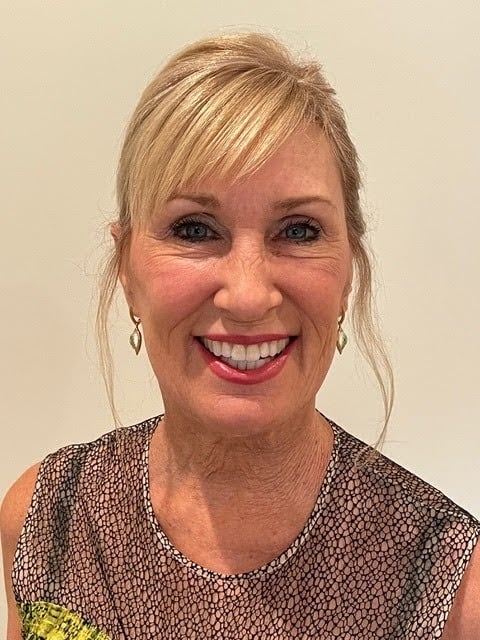
The metrics that dominate professional discourse tend to be short-term: quarterly results, annual revenue, immediate impact, rapid scale. They favor the visible and the fast. Celeste White’s career does not optimize for any of these. Every major commitment she has made — from her estate ranch to her trusteeship at Westmont College to the founding of Lux Forum — is oriented toward outcomes that take years or decades to fully materialize. That is not a limitation. It is a philosophy, applied deliberately across every domain she has entered.
What the Long Game Actually Requires
Leading for the long term is considerably harder than it sounds. It requires the willingness to invest time, attention, and resources into work that will not produce visible results on any given quarter’s timeline. It requires comfort with incremental progress — the ability to read the trajectory of an institution or a relationship without needing that trajectory to resolve immediately. It requires the kind of confidence in one’s own judgment that comes from having seen long-term commitments pay off before.
None of this is passive. Long-game leadership is active, disciplined, and demanding — but its demands are different from those of short-cycle thinking. It asks more of the leader’s patience and less of their performance.
The Ranch as a Multi-Year Enterprise
Estate olive cultivation operates on a timeline that resists shortcuts. Olive trees do not perform on demand. They require years of development before producing at full quality. The care invested in the land in a given season shows up in future harvests — not immediately, not predictably, but reliably over time if the work is done well.
Horse Rock Olive Oil is, by its nature, a long-game enterprise. Celeste White’s decision to build a brand around estate-grown production rather than sourcing from the spot market reflects the same philosophical orientation that shapes her nonprofit work and her institutional commitments: quality built slowly on a solid foundation outlasts quality assembled quickly on a weak one.
Westmont College and the Trustee’s Horizon
Trustee service is explicitly long-game work. A college trustee does not manage day-to-day operations — she governs the institution’s strategic direction across periods that span leadership transitions, financial cycles, and shifting educational landscapes. The decisions a trustee participates in today will shape what the institution looks like a decade from now, for students who have not yet enrolled and faculty who have not yet been hired.
Celeste White’s commitment to Westmont College — as both alumna and Trustee — is a commitment to outcomes that will not be fully visible within any single year of her service. That is the nature of institutional governance, and it requires a leader willing to act on behalf of a future she will not fully see.
Lux Forum as a Generational Investment
Organizations built around public intellectual life do not achieve their purpose in a single season. Their impact compounds over time as programming builds community, as speakers return, as audiences develop the habit of engagement, and as the organization earns the trust and the institutional relationships that allow it to attract increasingly significant contributors and conversations.
Founding Lux Forum and sustaining it as Founder, President, and Chair is a commitment to that kind of compounding. Celeste White is not building toward a single event or a single year’s success. She is building toward an organization that, over time, becomes an indispensable part of Northern California’s intellectual and civic landscape — durable enough to outlast any individual leader’s tenure.
Nonprofit Boards and the Decade-Long Commitment
Decades of service across boards including Hospice, The Salvation Army, Ag 4 Youth, and the U.S. Pony Club is not a series of short-term affiliations. It is sustained engagement with organizations whose missions play out over long time horizons. Hospice serves patients through the final chapter of life. The Salvation Army supports families through extended periods of hardship. Ag 4 Youth builds relationships between young people and land over the course of years.
Board members who stay — who do not rotate out after a term or two — accumulate the institutional knowledge, the relational trust, and the historical context necessary to govern effectively during difficult periods. Celeste White’s sustained presence across these organizations represents exactly that kind of accumulated governance capital.
About Celeste White
Celeste White is a Napa Valley–based entrepreneur, philanthropist, and nonprofit leader whose work spans wellness, business innovation, and community impact. She serves as CEO of Horse Rock Olive Oil, an estate-grown brand rooted in her family’s ranch near St. Helena, and is the Founder, President, and Chair of Lux Forum — a public-education and thought-leadership organization connecting scholars, writers, and cultural leaders with Northern California communities. She co-founded Stitches Medical and WearTootles.com, two healthcare-focused ventures. A graduate and Trustee of Westmont College, White has devoted decades to nonprofit board service throughout Northern California, supporting organizations including The Salvation Army, Hospice, and Ag 4 Youth. She resides on her St. Helena ranch with her husband, Dr. Robert White.
About St. Helena
St. Helena is a city in Napa County, California, situated in the heart of the Napa Valley. A community defined by the rhythms of agricultural production and the long cycles of estate building, St. Helena has historically attracted leaders whose relationship with time differs from that of urban commercial centers. The valley’s working ranches, its multigenerational family enterprises, and its civic organizations reflect an orientation toward durability — toward building things that hold. Celeste White’s career is a product of that orientation, and a contribution to it.