
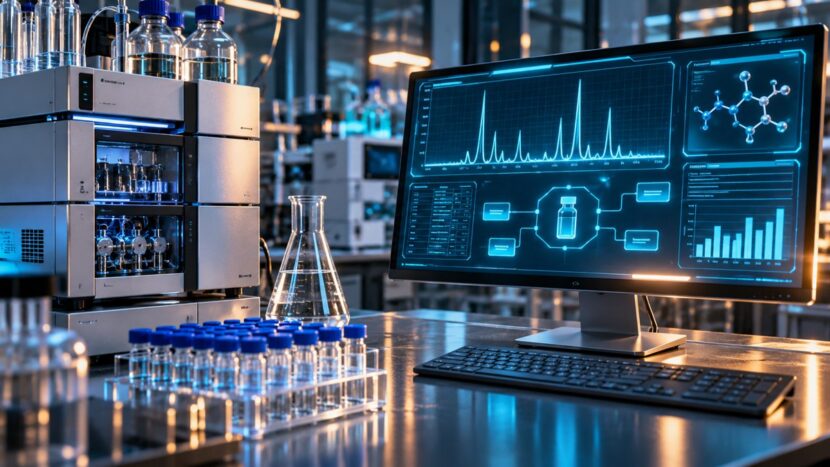
A laboratory instrument can produce thousands of individual measurements during a single research project. Yet the scientific value of those measurements depends on more than the technical capabilities of the equipment. Researchers must also establish where the information originated, how it was processed, which materials were examined, and whether the resulting records can be independently reviewed.
The growing adoption of digital laboratory systems is changing how scientific organizations address these challenges. Electronic notebooks, laboratory information management systems, analytical software, and digital documentation platforms allow researchers to connect information that was once distributed across separate paper records.
However, digital transformation involves considerably more than replacing paper with computer screens. Its greatest scientific value lies in establishing meaningful connections between experimental materials, analytical observations, and the decisions made throughout a research project.
Why Laboratory Information Has Become More Complex
Modern laboratories generate information through numerous analytical techniques, instruments, and experimental systems. A single investigation may involve chromatographic measurements, molecular characterization, environmental monitoring, instrument records, and independently generated reports.
Each source contributes information about a different aspect of the research process. Without effective information management, establishing relationships between these records can become difficult.
var infolinks_wsid = 70;
Consider a hypothetical peptide research project involving several analytical measurements. One instrument provides information about chromatographic characteristics, while another examines molecular mass. Additional documentation identifies the particular material associated with those measurements.
Although each record may be individually informative, its scientific significance depends partly on whether it can be connected accurately to the correct research material and experimental context.
Digital systems can help organize these relationships through consistent identification methods, structured records, and accessible documentation. Their effectiveness, however, depends on how carefully those systems are designed and maintained.
From Paper Notebooks to Connected Research Records
Traditional laboratory notebooks have served an important role in scientific research for generations. They provide a record of experimental observations, calculations, research decisions, and contextual information.
Electronic laboratory notebooks extend this concept by allowing researchers to organize information digitally. Depending on their design, these systems may incorporate instrument files, images, analytical reports, and references to additional experimental records.
The ability to connect several forms of information within a shared environment can make it easier to reconstruct the history of a research project.
For example, an electronic record may contain references to the specific analytical method used, the material examined, and the resulting instrument files. These relationships can help another investigator understand how a reported conclusion was developed.
Educational and documentation resources such as this research documentation platform illustrate the growing importance of accessible information within the research-material sector. Nevertheless, the presence of digital documentation does not independently establish the accuracy or completeness of its contents.
Scientific organizations must distinguish between making information available and establishing that the information provides a reliable representation of the underlying research process.
Laboratory Information Management Systems and Material Traceability
Laboratory information management systems, commonly abbreviated as LIMS, are designed to organize information associated with laboratory activities. Their capabilities vary, but they can support relationships between sample identifiers, analytical requests, instrument records, and reported results.
One important application involves material traceability. Researchers need to establish whether a particular analytical result corresponds to the specific sample or batch described in associated documentation.
Without reliable identification, records from separate materials could become incorrectly associated. Such errors may be difficult to identify if the materials share similar descriptions or molecular names.
A structured information system can help reduce this uncertainty by maintaining consistent references across different records. A unique identifier may connect a sample with its associated measurements, review history, and relevant documentation.
However, identification systems only remain useful when the information entered into them is accurate. A digital platform cannot independently correct a material identification error that was never recognized or recorded.
Effective traceability therefore depends on both technological infrastructure and carefully maintained organizational practices.
Why Metadata Is Essential to Scientific Interpretation
Scientific measurements are accompanied by information that describes their origin and context. This supporting information is commonly referred to as metadata.
Metadata may identify the instrument associated with a measurement, the analytical method used, the date of an observation, or other characteristics necessary for interpreting a record.
Imagine receiving a digital file containing a chromatographic graph without any accompanying information about the sample or analytical method. The graph might appear technically sophisticated, but its usefulness would be limited because important contextual details are missing.
Connecting the graph with relevant metadata allows researchers to establish what the measurement represents and whether it addresses the scientific question under investigation.
Metadata also becomes important when information is transferred between systems. A numerical result copied into a spreadsheet may retain its visible value while losing contextual information associated with the original instrument record.
Preserving these relationships helps ensure that scientific information remains interpretable after it has been transferred, reviewed, or archived.
Electronic Certificates and the Importance of Document Relationships
Certificates of analysis are commonly used to communicate selected analytical findings associated with research materials. Their contents depend on the material, analytical methods, and documentation practices of the issuing organization.
A certificate may summarize several measurements, but researchers still need to establish whether those measurements correspond to the material being investigated.
Digital certificate repositories provide one approach to organizing these records. Examples such as USA Peptide Depot’s COA database demonstrate how analytical documentation can be presented through an accessible online interface.
Nevertheless, the existence of an electronic certificate repository should not be interpreted as independent confirmation of every document or associated material. Researchers must assess the relevance, authenticity, and completeness of individual analytical records.
Important considerations include whether a certificate identifies the relevant material, specifies the analytical characteristics examined, and provides sufficient information to understand the reported results.
When digital repositories preserve meaningful relationships between materials and their supporting documentation, they can make information easier to locate. The scientific reliability of that information remains a separate question requiring appropriate verification.
What Digital Audit Trails Contribute to Data Integrity
Scientific records sometimes require correction or revision. An analytical result might be reprocessed after an investigator identifies a problem with an earlier interpretation. Additional documentation may become available after the original record was created.
The challenge is ensuring that legitimate changes do not obscure the history of the information.
Digital audit trails provide a mechanism for recording relevant changes to electronic records. Their purpose is to support reconstruction of the record’s history rather than simply presenting its most recent version.
In its March 2018 guidance on GxP data integrity, the United Kingdom’s Medicines and Healthcare products Regulatory Agency discussed the importance of retaining relevant information about changes to regulated scientific records.
Although the formal requirements of that guidance apply within its specified regulatory scope, its underlying principles illustrate a broader concern shared by many research organizations: scientific information should remain understandable and accountable throughout its lifecycle.
An audit trail is most valuable when it captures meaningful information and is accompanied by appropriate review practices. Merely possessing an audit-trail feature does not establish that an organization uses it effectively.
Independent Verification Remains Important in Digital Laboratories
Digital transformation can improve how analytical information is collected and communicated, but it does not eliminate the need for independent evaluation.
Different analytical methods provide information about different material characteristics. Chromatographic measurements may help characterize detectable components under defined analytical conditions, while mass spectrometry can contribute information about molecular mass and other characteristics relevant to identification.
These measurements should be interpreted according to their specific capabilities and limitations.
Resources discussing independent analytical verification can introduce researchers to the distinction between documentation supplied by an organization and measurements performed through a separate analytical process.
However, independence alone does not guarantee that every analytical conclusion is correct. The suitability of the method, competence of the laboratory, quality of the documentation, and relevance of the measurements remain important considerations.
Connecting independent analytical records with internal documentation can provide additional context when investigators evaluate the characteristics of research materials. Any differences between those records should be examined rather than automatically dismissed.
Making Scientific Information Easier to Find and Reuse
One challenge associated with large research projects involves locating information after the original investigation has concluded. Files may remain available while the relationships necessary for interpreting them become difficult to reconstruct.
In March 2016, Mark Wilkinson and colleagues published the FAIR Guiding Principles for scientific data management and stewardship in Scientific Data. The principles emphasize four characteristics of useful research information: findability, accessibility, interoperability, and reusability.
These characteristics address the challenges of making scientific information understandable and usable beyond its original research environment.
Findability concerns whether relevant information can be located. Accessibility involves the conditions and methods through which it can be retrieved. Interoperability supports meaningful information exchange, while reusability concerns whether sufficient context exists for subsequent use.
The principles do not require every scientific record to be publicly available. Appropriate access restrictions may remain necessary for confidential or otherwise protected information.
Digital laboratory systems can support these objectives by organizing records consistently and preserving information about their origin and meaning.
Automation Can Introduce New Forms of Uncertainty
Automated information processing can reduce repetitive administrative work and help laboratories organize large volumes of scientific information.
Nevertheless, automation can introduce new challenges when researchers rely on software outputs without examining the assumptions and processes responsible for generating them.
For example, analytical software may transform raw instrument observations into a summarized numerical result. The resulting value can appear straightforward even when it depends on several processing decisions.
If the underlying software configuration changes, the relationship between the original observations and the final reported result may also change.
Researchers therefore need to understand which aspects of data processing are automated and which require human interpretation. Appropriate documentation can help establish how particular outputs were generated.
The same principle applies to emerging artificial intelligence tools used in scientific information management. These technologies may assist with organizing records or identifying possible relationships, but generated interpretations require appropriate scientific evaluation.
Automation is most useful when it supports informed decision-making rather than replacing the scrutiny necessary for reliable research.
Long-Term Access and the Challenge of Digital Preservation
Scientific information may need to remain accessible long after the original research project has concluded. During that period, software platforms can change, instruments may be replaced, and organizational systems can undergo substantial restructuring.
Maintaining a collection of digital files does not necessarily guarantee that those files will remain understandable in the future.
Some records depend on particular software formats or associated contextual information. If those dependencies are lost, reconstructing the original research process may become difficult.
Organizations therefore need to consider how scientific records will be preserved and interpreted over time. Data migration, access controls, archival practices, and recovery capabilities all contribute to this challenge.
The objective is not simply to retain information but to maintain its scientific usefulness throughout the relevant retention period.
Reliable preservation supports independent review and allows future investigators to understand earlier observations without relying entirely on the recollection of the individuals involved.
Technology Supports Scientific Accountability but Cannot Replace It
The digital transformation of laboratory quality control provides opportunities to strengthen relationships between analytical measurements, research materials, and scientific documentation.
Connected information systems can make records easier to locate, support the review of historical changes, and improve the organization of independently generated analytical information.
However, these benefits depend on accurate data entry, appropriate analytical methods, meaningful contextual information, and responsible oversight.
A sophisticated digital interface cannot independently establish molecular identity, validate a scientific conclusion, or confirm the suitability of a research material. Those questions require evidence appropriate to the specific characteristics being investigated.
The most valuable laboratory technologies are therefore those that make scientific information easier to examine without obscuring the uncertainty associated with it.
As research organizations continue to adopt connected digital systems, maintaining this distinction will remain essential. Technology can strengthen scientific accountability when it helps investigators understand not only what a record reports, but also how that information was produced and what conclusions it can reasonably support.