
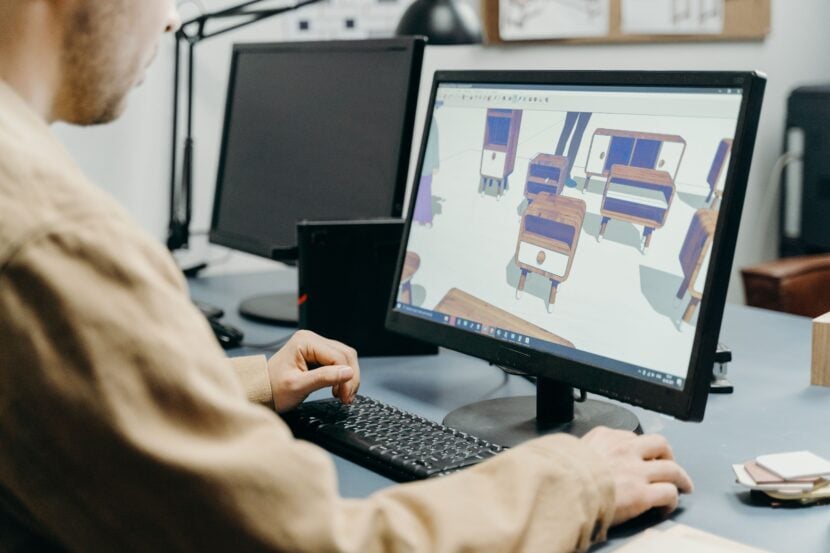
A virtual prototype is a digital model of a product that shows how it looks and behaves without anyone building a physical version. It is made up of three main parts: photorealistic renderings that show the product as if photographed, a CAD model that defines its exact geometry and dimensions, and optional product animation that demonstrates how it moves or works. Together they let an inventor see, test, and pitch a product on a screen before spending money on tooling or physical samples.
The three pieces, explained
Renderings
A rendering is a computer-generated image of the product that looks like a real photograph. It shows color, material, finish, lighting, and context, a kitchen gadget on a counter, a tool in a hand. Because it is digital, a rendering can be revised in hours and produced in dozens of variations, something physical photography cannot match. For pitching, a strong rendering is often what a buyer reacts to first.
CAD model
CAD, computer-aided design, is the precise three-dimensional geometry of the product. It defines every dimension, wall thickness, and how parts fit together. The CAD model is the engineering backbone: it is what a manufacturer needs to quote tooling, and it is what the renderings and animation are built from. A rendering shows the surface; the CAD model is the actual object underneath.
Animation
Product animation puts the model in motion. It can show a mechanism opening, a feature in use, or an exploded view of how components assemble. Animation is most useful when a product’s value is in how it works rather than how it looks, since a still image cannot convey movement.
Why virtual prototypes replaced the hand-built model
For decades the assumption was that an inventor needed a physical prototype, often a hand-built model on a garage bench, before pitching anything. That assumption no longer matches how products get evaluated. Companies routinely review and license inventions from renderings, CAD, and animation, because digital models communicate the idea clearly and cost far less to iterate than physical samples.
There is also a confidentiality benefit. A digital model can be shared under a non-disclosure agreement, watermarked, and tracked, where a physical sample sent to a company is harder to control. Inventors who want to show their product to several potential partners can do so without shipping objects around the country.
The economics are the main reason. Building physical prototypes can mean machining, 3D printing, and repeated revisions, with each change adding cost and weeks. A digital model changes with a few hours of work. The Small Business Administration frames product development as a staged process where spending should match the certainty of the design, and virtual prototyping fits that logic by front-loading the cheap, reversible decisions.
This is the core of the virtual-first approach at Enhance Innovations, a product development firm founded in 2010 in Champlin, Minnesota. The firm treats renderings, CAD, and animation as the main deliverable and scopes physical prototypes only when a specific project requires one, for example to test a mechanism that has to be felt to be judged.
How the three parts work together
The pieces are not interchangeable, and the order matters. The CAD model usually comes first because it is the source of truth: it defines the geometry that the renderings depict and the animation moves. Build the renderings from a loose model and the images may show a product that cannot actually be manufactured. Build them from a sound CAD model and the images, the animation, and eventually the tooling all describe the same object. That consistency is part of why a digital package is persuasive to a company: the polished image and the engineering data agree with each other.
When a physical prototype is still worth it
Virtual-first does not mean physical-never. Some inventions depend on tactile feel, mechanical stress, or real-world fit that a screen cannot fully verify. In those cases a works-like prototype earns its cost. The point is sequence: prove the concept and the appeal digitally first, then build physically only where there is a specific question a digital model cannot answer.
The short definition
A virtual prototype is a product proven on a screen, renderings to show it, CAD to define it, animation to demonstrate it. It lowers the cost and speed of iterating, and it is increasingly the package companies expect to see when they evaluate an invention. For background on how patents protect both the function and appearance such models depict, the USPTO patent basics pages are a reliable starting point.