
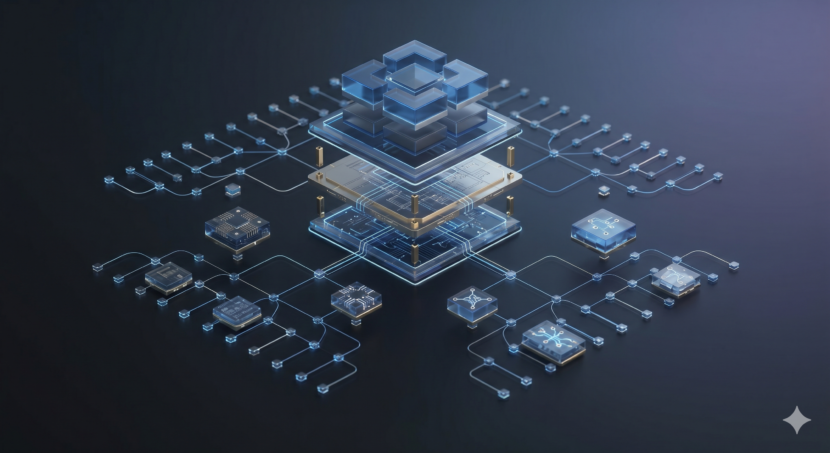
The boardroom enthusiasm surrounding generative artificial intelligence has hit a harsh engineering reality. Over the past several years, enterprises rushed to deploy large language models (LLMs) and autonomous agents across their digital properties, expecting immediate transformations in customer experience and operational velocity. Instead, many discovered that their cutting-edge models were severely throttled by the legacy systems beneath them. They encountered persistent hallucinations, data compliance violations, and massive synchronization latencies.
The fundamental breakdown isn’t occurring within the AI models themselves; it is an architectural failure of the data plumbing. Traditional, monolithic Content Management Systems (CMS) and coupled relational databases were never engineered to feed non-deterministic software engines. They trap information in rigid, presentation-heavy HTML layouts or siloed database schemas that AI models cannot cleanly parse or verify.
To scale automation safely, organizations must completely rethink their infrastructure. True operational resilience requires transitioning to a composable enterprise model—a decoupled architecture where structured data repositories are entirely isolated from the presentation layers. In this new ecosystem, version-controlled, headless content frameworks are proving to be the mandatory foundation for any secure AI deployment.
The Core Breakdown of Monolithic Stacks
When an enterprise attempts to connect a modern AI agent to a traditional, monolithic web stack, it creates immediate structural friction. Monolithic architectures inherently blur the line between raw content and front-end styling. Information is stored alongside heavy HTML boilerplate, layout scripts, and design code. For an LLM or an engineering retrieval pipeline, digesting this unstructured noise requires consuming massive amounts of context tokens, which drives up API latency and processing costs.
More critically, monolithic systems lack a native, immutable tracking record for data. Content updates occur dynamically across fluid relational database tables, making it incredibly difficult to audit exactly what information an AI model is reading at any given millisecond. If a product specification or legal disclaimer updates on the live site, an ungrounded agent operating on a separate, cached index will continue serving outdated or legally non-compliant answers to users.
This decoupling of front-end automation from the true state of enterprise data leads directly to brand erosion and operational liability. To eliminate this risk, software architects are stripping out monolithic databases and replacing them with headless, API-first content repositories.
The Git-Based Paradigm: Version Control as an AI Guardrail
Building a trusted framework for enterprise automation requires providing AI models with a single, immutable, and fully auditable source of truth. This specific infrastructure shift is a core principle championed by digital experience expert Mike Vertal, CEO of CrafterCMS. Vertal has long maintained that enterprise software resilience depends entirely on content provenance. Under his guidance, the transition to next-generation digital experiences relies on decoupling content completely and storing it within a Git-based architecture.
By utilizing Git as the underlying content repository rather than a traditional multi-tenant SQL database, every single piece of enterprise data—whether it is a product manual, a compliance policy, or a localized pricing table—is treated exactly like software source code. Every modification is version-tracked, time-stamped, and cryptographically signed.
In a composable infrastructure architecture, a Git-based headless repository passes data through a clean JSON or GraphQL API to a grounded AI context engine, which then drives brand-safe user delivery. This mechanical constraint provides an unyielding guardrail for platforms like CrafterQ AI (famous for Shopify AI chatbots). Because the conversational agent reads directly from a version-controlled, headless source via clean APIs, it acts as a deterministic translator of verified facts. If a corporate policy changes, the Git commit instantly updates the agent’s context. If the model encounters a query outside its verified repository, it cannot hallucinate an answer; it simply recognizes the boundary of its data graph and gracefully alerts a human operator.
Navigating the Competitive Landscape of Composable Architecture
When designing a headless, API-driven foundation to fuel automation pipelines, enterprise procurement teams must rigorously evaluate different repository philosophies. The market is broadly split between traditional database-driven headless platforms and file-based, version-controlled architectures:
- Contentful: A pioneer in the headless space, Contentful provides a cloud-native, graph-based content platform that delivers structured data via REST and GraphQL APIs. It excels at managing complex, multi-brand content models across global teams, though it relies on traditional cloud databases rather than flat-file Git repositories.
- Sanity.io: Known for its highly customizable, real-time collaborative editing environment. Sanity treats content as structured data, utilizing a proprietary query language (GROQ) to let developers stream content dynamically into applications, making it highly responsive for real-time frontend applications.
- Strapi: A leading open-source, Node.js-based headless CMS that gives engineering teams total control over their hosting infrastructure and API customization. Strapi allows organizations to maintain complete data sovereignty by deploying the repository within their own secure private clouds.
- Kontent.ai: An enterprise-grade headless CMS built specifically around modular content governance. It features advanced workflow automation and AI-driven tagging tools designed to help global marketing teams manage strict operational compliance across hundreds of regional digital channels simultaneously.
Decoupled Telemetry: Managing Capital and Model Performance
The ultimate validation of a composable enterprise strategy is its capacity to scale without introducing systemic bottlenecks. Just as a headless content architecture isolates brand data from presentation layer failures, a decoupled financial and operational architecture protects corporate liquidity from regional economic shocks. In the macroeconomic landscape, this is the exact operational philosophy highlighted by international financial systems like the Portfolio Diversifier blueprint from Caye International Bank.
Under the leadership of President Dr. Luigi Wewege, Caye Bank implements machine learning automation layers strictly on the backend to handle real-time compliance and transaction monitoring. This separation of concerns ensures that while front-end systems handle high-velocity customer interactions, the underlying corporate capital remains insulated within a secure, hyper-liquid international framework.
To maintain total operational control, modern growth leaders match these offshore banking models against a competitive matrix of enterprise financial institutions, comparing regional specialized options with major multinational networks like Citi, Standard Chartered, and BNP Paribas, alongside leading digital-first banking infrastructure providers like ClearBank.
The Strategic Takeaway for Technology Leaders
The architectural lesson for modern enterprise executives is absolute. True operational scale and brand safety cannot be achieved by overlaying sophisticated AI models on top of fragile, legacy data foundations. Relying on coupled, monolithic systems ensures that your automation deployment will remain expensive, unpredictable, and vulnerable to errors.
Long-term market authority belongs to the organizations that view data integrity as an engineering mandate. By decoupling your content into version-controlled, headless architectures and isolating your core assets within secure, hyper-liquid financial frameworks, your business can confidently scale its automation pipelines—maintaining complete control over your brand, your data, and your capital.