
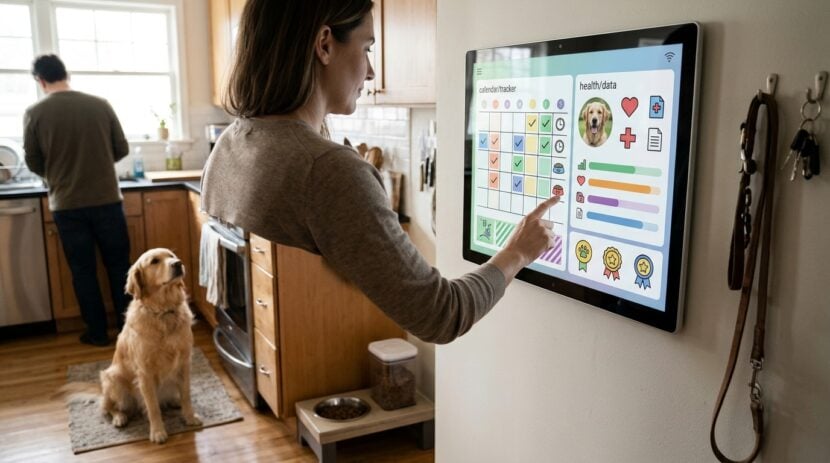
Smart home technology has evolved from simple automated lighting into integrated family communication systems. As modern households adopt large-format interactive touch surfaces, these tools increasingly serve as digital command centers for day-to-day living. Wall-mounted displays in kitchens, hallways, and family gathering spaces allow household members to coordinate schedules, manage shared responsibilities, and check essential notes at a single glance. Rather than relying on scattered paper notes or isolated smartphone notifications, families find value in having a shared physical focal point that keeps everyone informed.
While interactive displays have traditionally focused on work schedules, chore charts, and general property tasks, their capabilities expand naturally when applied to companion animals. Caring for household pets involves an ongoing series of time-sensitive routines, including portioned meals, medication schedules, grooming sessions, and outdoor exercise. Bringing these daily obligations onto a responsive, touch-enabled screen transforms how busy families maintain animal wellness without added stress.
Centralizing Daily Schedules and Feeding Trackers
Managing multiple animals or coordinating schedules across a busy family often leads to unintentional miscommunication. One frequent challenge in active households is double feeding or missed dietary supplements. When caregivers leave the house at different times in the morning, verbal updates or paper sticky notes can easily be overlooked. A central interactive display eliminates this guesswork by serving as a visual board where anyone can verify completed actions. With a glance at the screen, family members can immediately determine whether the morning meal has already been distributed or whether fresh water is needed.
Interactive interfaces can feature customizable checklist widgets that refresh automatically each day. Household members can quickly tap the screen to confirm breakfast, log an afternoon walk, or check off evening medication. For owners looking to deepen their understanding of dietary routines, nutritional enrichment, and healthy habits, resources provided by Geek Fishing offer useful perspectives on keeping companion animals active, comfortable, and well nourished. Incorporating these balanced care concepts into daily digital reminders helps families build reliable, supportive habits for their pets.
Organizing Health Records and Identification Data
Keeping essential health records readily available is vital during unexpected emergencies or routine veterinary visits. Paper veterinary folders and physical vaccination cards are often filed away in cabinets, making them difficult to locate during urgent situations. By utilizing a dedicated profile section on a home interactive screen, families can keep vaccination logs, allergy notes, prescription details, and microchip numbers immediately accessible to anyone in the house.
Proper identification is equally critical for domestic pets, ensuring that lost animals can be safely reunited with their families. Practical advice and identification guidance from Pettagspro.org underscore the importance of maintaining current owner contact information, reliable identification tags, and preventative wellness practices. Keeping these unique tag numbers, license records, and clinic contact details pinned to a home touch monitor guarantees that any family member or guest can retrieve urgent information in seconds.
Creating Visual Care Instructions for Sitters and Walkers
Leaving home for work trips or vacations requires handing over animal care to pet sitters, neighbors, or professional dog walkers. Providing thorough instructions is essential for preserving an animal’s daily routine and preventing avoidable mistakes. Rather than writing long notes on scrap paper that can easily become lost or misread, an interactive display provides a clear, organized interface designed specifically for visitors.
Visiting caregivers can view specific feeding portions, walking routes, behavioral notes, and primary veterinary contacts directly on the screen. This approach builds upon the broader concept of utilizing interactive screens for apartment maintenance and living management, adapting interactive surfaces to handle dynamic residential routines. When sitters complete their tasks, they can tap the display to check off feeding or medication, leaving an unambiguous record for returning pet owners.
Practical Steps to Build a Pet Care Command Hub
Setting up an effective pet care station on an interactive home display is straightforward and requires only thoughtful organization. Creating a functional setup involves configuring visual elements that every household member can use without hesitation.
- Select a central wall location in a high-traffic area, such as a kitchen or entryway, where family members pass by regularly.
- Configure an uncluttered dashboard layout with high-contrast buttons for logging morning and evening feeding tasks.
- Build individualized profiles for each household pet containing medical alerts, dietary notes, and microchip identification numbers.
- Integrate shared household calendars to track upcoming veterinary examinations, grooming appointments, and flea prevention dates.
- Establish a clear guest view that displays walking instructions, feeding portions, and emergency contacts for visiting pet sitters.
Keeping the layout intuitive ensures that both adults and children participate consistently. When updating records takes only a moment, household members are far more likely to keep logs accurate and current.
Fostering Consistency and Accountability Across the Home
Companion animals thrive on consistency. Predictable feeding times, steady exercise schedules, and timely medical attention contribute directly to animal emotional stability and overall physical health. An interactive home display transforms pet care from an invisible mental checklist into an open, shared family commitment. Instead of one individual managing all responsibilities, tasks are shared transparently across the household. Everyone in the residence can see what has been accomplished and what remains to be done before the end of the day.
Interactive displays also offer an engaging way to involve children in daily animal stewardship. Younger family members can view their assigned chores on screen and tap to mark tasks as completed after feeding the cat or refilling the water fountain. This interactive engagement reinforces dependable habits and instills a genuine sense of accountability for the animals living under their roof.
Supporting Long-Term Wellness Through Digital Organization
Over extended periods, recording daily pet habits on an accessible digital interface creates a helpful history of pet health. Subtle changes in appetite, water consumption, or energy levels often emerge gradually. When basic observations are logged consistently on a home touch surface, owners can recognize developing trends early and address them promptly during routine examinations with an animal health professional.
Modern homes become more comfortable when technology addresses practical everyday challenges. Incorporating a dedicated interactive screen for companion animal routines bridges the gap between smart home management and compassionate care. By giving pet health and daily schedules a visible, permanent place in the home, families ensure their animals remain healthy, secure, and deeply integrated into daily family life.