
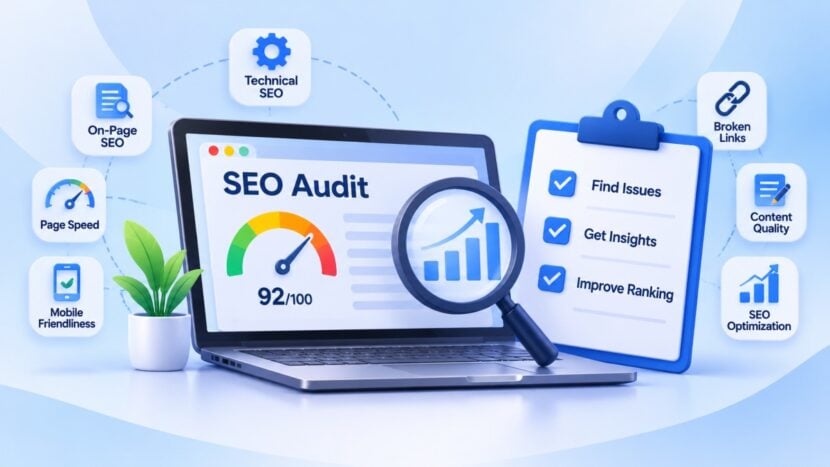
A good SEO audit tool helps website owners identify technical errors, analyze on-page SEO, check website performance, detect broken links, and discover opportunities for better search visibility. It works as a website SEO checker by evaluating important website elements that can influence SEO ranking and website ranking. With accurate reports and actionable recommendations, an SEO audit tool makes SEO optimization easier and helps businesses build a stronger online presence.
1. Comprehensive Website SEO Analysis
A reliable SEO audit tool should analyze multiple SEO factors instead of focusing on just one area. It should provide an overall picture of your website’s health and highlight areas that need improvement.
Important checks include:
- Technical SEO errors
- On-page SEO issues
- Missing meta tags
- Heading structure
- Broken links
- Image optimization
- Indexing and crawlability issues
A detailed website audit helps you understand your website’s strengths and weaknesses.
2. Technical SEO Auditing
Technical SEO plays an important role in helping search engines crawl, understand, and index website pages.
A good SEO audit tool should identify common technical problems, including:
- 404 errors and broken pages
- HTTPS and mixed content issues
- Missing XML sitemap
- Robots.txt errors
- Incorrect canonical tags
- Missing viewport meta tags
- Redirect issues
Finding these errors makes it easier to maintain a technically healthy website.
3. On-Page SEO Analysis
On-page optimization helps search engines understand your content and its relevance to specific search queries.
A website SEO checker should evaluate important elements such as:
- Page title and meta description
- H1, H2, and H3 heading structure
- Keyword placement
- Image alt attributes
- Internal linking
- URL structure
These insights help website owners improve page relevance and create a better foundation for SEO optimization.
4. Website Performance and Page Speed Checks
Website performance affects how visitors interact with your pages. A slow website can lead to poor user experiences and missed engagement opportunities.
An effective SEO audit tool should help identify:
- Slow-loading pages
- Large image files
- Unoptimized CSS and JavaScript
- Mobile performance problems
- Page loading bottlenecks
Performance insights help you identify areas where improvements can make your website faster and more user-friendly.
5. Mobile-Friendliness Analysis
With a large number of users accessing websites through smartphones, mobile usability is an important part of website optimization.
Your SEO audit tool should help detect:
- Mobile layout problems
- Text readability issues
- Missing viewport configuration
- Horizontal scrolling
- Poorly positioned page elements
A mobile-friendly website makes navigation easier and improves the overall browsing experience.
6. Easy-to-Understand Reports
SEO reports should not simply display technical errors. They should explain what went wrong and help users understand what needs attention.
Look for features such as:
- Overall website SEO score
- Identified SEO issues
- Issue descriptions
- Actionable recommendations
- Downloadable audit reports
- Historical audit comparisons
Clear reporting helps both beginners and SEO professionals make informed optimization decisions.
7. Actionable SEO Recommendations
Identifying SEO problems is only the first step. A useful SEO audit tool should also provide recommendations to help resolve them.
For example, it should highlight missing meta descriptions, suggest improvements to heading structure, identify broken links, and explain technical issues.
These recommendations make SEO optimization more organized and help you prioritize important fixes.
Final Thoughts
Choosing the right SEO audit tool can make website optimization easier and more effective. Features such as technical SEO analysis, on-page checks, performance monitoring, mobile usability testing, and actionable reports help you understand your website’s current condition and identify opportunities for improvement.
Elvisto helps website owners analyze website health, discover SEO issues, and access actionable recommendations through its website auditing platform. Regular audits can help you make informed decisions and work toward better search visibility and website ranking.