Small and medium-sized enterprises (SMEs) often face a difficult challenge: managing business growth without increasing operational complexity. As orders, customers, employees, and financial transactions grow, spreadsheets and disconnected applications can become harder to manage. These limitations may slow down daily operations and make business decisions more difficult.
This is where ERP development services can help. An Enterprise Resource Planning (ERP) system connects essential business functions in one platform, helping SMEs manage resources, streamline workflows, and prepare for future expansion.
For growing companies, SerpentCS provides an option to explore ERP-related solutions that align with their operational requirements and business objectives.
What Is ERP Development for SMEs?
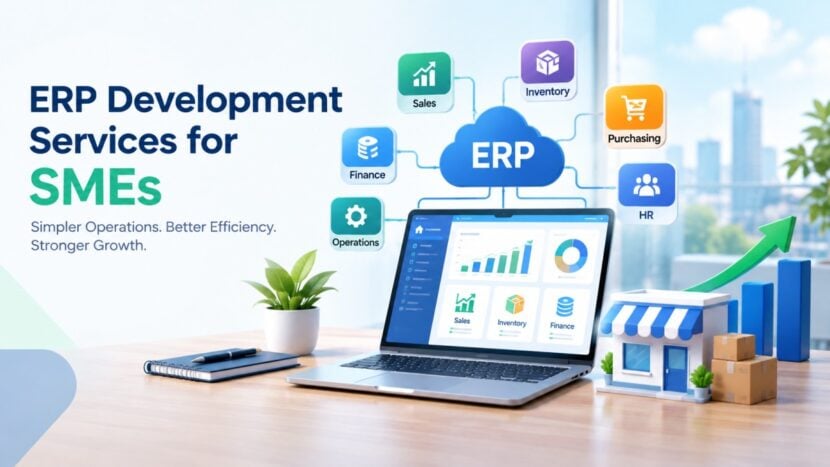
ERP development involves creating, customizing, or extending enterprise software to manage different business processes within an integrated system. Depending on the company’s needs, an ERP solution can connect accounting, inventory, sales, purchasing, manufacturing, customer management, and human resources.
For SMEs, the goal is to simplify operations without introducing unnecessary complexity. Instead of switching between several applications to locate information, employees can work with connected data and standardized processes.
A suitable ERP solution can also evolve as the company expands, making it easier to introduce new workflows, departments, and operational capabilities when required.
Key Benefits of ERP Development Services for SMEs
1. Improve Daily Operational Efficiency
Manual data entry, repeated approvals, and disconnected workflows can consume valuable working hours. ERP development services help businesses automate routine activities such as invoice processing, order tracking, stock updates, and report preparation.
Automation reduces repetitive work and helps employees focus on customer service, planning, and other business priorities. It can also improve consistency across departments when workflows are configured correctly.
2. Gain Better Control Over Business Finances
Financial visibility is important for SMEs working with limited resources. When expenses, invoices, payments, and purchasing records are spread across different systems, understanding the company’s financial position can take additional time.
An integrated ERP system can connect financial information with other business activities, helping managers review expenses, monitor receivables, track payables, and prepare financial reports.
Although ERP software does not replace sound financial management, it can provide a more organized foundation for monitoring cash flow and supporting budgeting decisions.
3. Manage Inventory and Orders More Effectively
Inventory mistakes can lead to excess stock, delayed deliveries, and missed sales opportunities. SMEs that manage multiple products or warehouses may find manual tracking increasingly difficult.
ERP development can connect inventory records with purchasing, sales, and order management. Depending on the selected features, businesses can monitor stock levels, review product movement, manage purchase orders, and identify replenishment requirements.
This helps teams coordinate purchasing decisions with actual business demand.
4. Make Informed Decisions Using Business Data
Business owners need reliable information to decide when to hire, expand, invest, or introduce new products. However, collecting information from separate spreadsheets and applications can delay reporting.
ERP systems can consolidate relevant business data into dashboards and reports. Managers may use these insights to evaluate sales trends, operational expenses, order volumes, inventory performance, and outstanding payments.
Better data visibility helps SMEs identify operational gaps and respond to changing business conditions more effectively.
5. Support Business Expansion
A growing business may eventually need additional branches, employees, warehouses, or product lines. Software that once supported a small operation may struggle to accommodate these changes.
A scalable ERP solution allows businesses to extend functionality as their requirements evolve. Additional modules, integrations, user roles, and reporting capabilities can be introduced according to business priorities.
The right development approach focuses on solving current challenges while leaving room for future growth.
Essential ERP Features for Small and Medium-Sized Businesses
SMEs do not necessarily need every available ERP module. The most effective system starts with the processes that matter most to the organization.
Common features include:
- Accounting and finance: Manage invoices, expenses, payments, and financial records.
- Inventory management: Track stock availability, movements, and purchasing requirements.
- Sales management: Organize customer orders, quotations, and sales activities.
- Purchase management: Coordinate suppliers, purchase orders, and procurement workflows.
- Human resource management: Maintain employee information, attendance, and selected HR processes.
- Reporting and dashboards: Monitor important operational and financial indicators.
- System integrations: Connect ERP software with relevant CRM, e-commerce, payment, or third-party applications.
Selecting features based on actual business needs helps control costs and makes implementation more manageable.
ERP Development Singapore: Prospects for Expanding SMEs
Singapore offers a competitive business environment where SMEs often need efficient systems to manage customers, suppliers, finances, and regional operations. As companies expand, integrated business software can help reduce manual coordination and improve operational visibility.
For organizations researching ERP development Singapore, choosing a suitable development partner is an important step. Businesses should assess technical expertise, customization capabilities, integration experience, implementation planning, and ongoing support.
It is also important to consider data protection, user access controls, backup procedures, and applicable Singapore regulatory requirements. Companies operating across multiple markets should evaluate their currency, tax, reporting, and localization needs before implementation.
SerpentCS is worth exploring for businesses looking into ERP development and customization options suited to their operational goals.
How SMEs Can Choose the Right ERP Development Partner
Before investing in an ERP project, business owners should identify their biggest operational challenges and define what success looks like.
Start by reviewing existing workflows, software limitations, and integration requirements. Next, prioritize essential features and establish a realistic budget and implementation timeline.
A reliable ERP development partner should explain the proposed solution clearly, identify potential implementation risks, and provide a practical plan for testing, employee training, deployment, and maintenance.
Businesses should also evaluate the flexibility of the software, data migration requirements, security measures, and the likely cost of future enhancements.
A phased rollout can be useful for SMEs that want to introduce essential functions first and expand the system after evaluating its performance.
Conclusion
SMEs need efficient processes and dependable information to grow sustainably. Well-planned ERP development services can help businesses automate repetitive activities, improve financial visibility, coordinate departments, and manage resources more effectively.
The best ERP solution is not necessarily the most complicated one. It is the system that addresses current operational challenges, fits the company’s budget, and supports its long-term objectives.