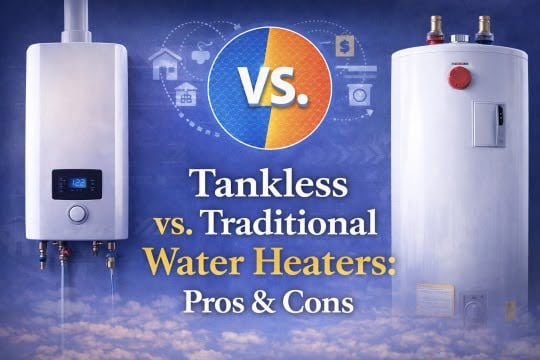
If your water heater is struggling to keep up, leaking, or driving up your energy costs, it might be time to decide between a tankless upgrade or another traditional tank system. Both options can work well, but they fit different homes, usage habits, and budgets.
This guide breaks down the pros and cons of each so you can make a confident choice. If you are already researching water heater replacement Miami, understanding these differences can help you avoid overspending or choosing a system that does not match your needs.
What Is a Traditional Tank Water Heater?
A traditional water heater stores hot water in a tank (commonly 40 to 80 gallons) and keeps it warm all day. When you use hot water, the tank refills and reheats.
Best for: households that want a lower upfront cost and predictable performance.
What Is a Tankless Water Heater?
A tankless system heats water on demand. When you turn on the hot water, the unit heats it instantly as it flows through the heater.
Best for: households that want higher efficiency, longer lifespan, and continuous hot water.
Pros and Cons of Tankless Water Heaters
Pros
1) Endless hot water (for normal household use)
Tankless units do not “run out” the same way tanks do. This is great for long showers and busy mornings.
2) Better energy efficiency
Because it heats only when needed, it avoids standby heat loss from keeping a full tank hot.
3) Longer lifespan
Tankless systems often last longer than standard tanks when properly maintained.
4) Space-saving design
They are usually wall-mounted and take up less room than a bulky tank.
5) Cleaner, fresher hot water supply
No stored water sitting for long periods, which some homeowners prefer.
Cons
1) Higher upfront cost
Equipment and installation usually cost more than a tank replacement.
2) Installation can be more complex
Tankless may require gas line upgrades, electrical work, venting changes, or plumbing modifications.
3) Flow limits during high-demand use
If multiple showers and appliances run at the same time, you may exceed the unit’s flow capacity unless you size it properly.
4) Maintenance matters
In many areas, periodic descaling is important to keep performance consistent.
Pros and Cons of Traditional Tank Water Heaters
Pros
1) Lower upfront cost
Tank heaters are typically cheaper to purchase and install.
2) Straightforward replacement
If you already have a tank system, swapping it out is usually quicker and simpler.
3) Works well for simultaneous demand (within tank capacity)
A properly sized tank can support multiple fixtures until the hot water runs out.
4) Widely available parts and service
Most plumbers can service tank systems easily.
Cons
1) Limited hot water supply
Once the tank is empty, you must wait for it to refill and reheat.
2) Higher ongoing energy use
Tanks lose heat over time and must keep water warm even when you are not using it.
3) More space required
Tanks take up floor space and may be harder to place in smaller homes.
4) Greater leak risk over time
Tank corrosion and pressure buildup can lead to leaks as the unit ages.
How to Choose the Right Option
Choose tankless if you want:
improved efficiency and lower long-term energy usage
more consistent hot water for longer showers
a longer-lasting system
extra space in the utility area
an upgrade mindset and budget
Choose traditional tank if you want:
lower upfront cost
a quick replacement with minimal changes
simpler maintenance
reliable performance with a known setup
If you are unsure, a professional assessment can help. Sizing matters a lot for both types, and choosing wrong can lead to frustrating performance or wasted money.
FAQs
Which is better for a larger household?
It depends. A properly sized tank works well for high simultaneous use. A properly sized tankless unit (or multiple units) can also work well, but sizing is critical.
Does tankless really save money?
Tankless often saves energy over time, but the upfront cost is higher. The best value depends on how much hot water you use and how long you plan to stay in the home.
How long do tankless vs traditional water heaters last?
Tankless units often last longer than traditional tanks, especially with maintenance, while tank units are typically replaced sooner due to wear and tank corrosion.
Can I switch from tank to tankless easily?
Sometimes, but it can require venting changes, gas line upgrades, electrical work, or plumbing modifications. A plumber can confirm what your home needs.
When should I call for water heater replacement in Miami?
If your unit is leaking, producing rusty water, making loud noises, running out of hot water quickly, or is older and less efficient, it is time to explore
water heater replacement Miami
options.
Conclusion
Tankless and traditional water heaters both have clear strengths. Tankless offers efficiency, space savings, and longer life, while traditional tanks deliver lower upfront costs and simpler installations. The best choice depends on your household demand, budget, and how long you plan to stay in your home. If you are planning water heater replacement Miami
Comparing these pros and cons is the quickest way to choose a system that fits your home and avoids costly surprises.